Knowing how to clean an outdoor grill properly can make a big difference in the way your food tastes, how well your grill performs, and how long it lasts. A dirty grill can collect grease, food residue, carbon buildup, and debris that affect cooking and may even create unwanted smoke or flare-ups.
The good news is that cleaning an outdoor grill does not have to be difficult. With a few basic supplies and the right method, you can remove stubborn grease, clean the grates, clear the burners, and keep the inside of your grill in good condition.
Whether you have a gas grill, charcoal grill, or another type of outdoor cooker, this guide explains how to clean it safely and effectively.
How Often Should You Clean an Outdoor Grill?
How often you should clean your grill depends on how frequently you use it and what you cook.
A light cleaning after every cooking session is a good habit. Once the grill has cooled enough to handle safely, remove leftover food and brush the cooking grates.
A deeper cleaning is usually needed several times during the grilling season, especially if you use your grill regularly.
You should consider a deeper cleaning when:
- Food starts sticking to the grates.
- You notice heavy grease buildup.
- The grill produces more smoke than usual.
- Burners are not heating evenly.
- There is a strong smell of old grease.
- The inside of the grill has significant carbon or food buildup.
- Flare-ups are becoming more frequent.
Regular maintenance is much easier than trying to remove months or years of accumulated grease at once.
What You Need to Clean an Outdoor Grill
You do not need a large collection of expensive cleaning products. Most grill cleaning jobs can be handled with a few basic supplies.
Basic Cleaning Supplies
Gather:
- A grill brush or suitable grill scraper
- Warm water
- Dish soap
- A bucket or bowl
- Cleaning cloths or paper towels
- A non-abrasive sponge
- Disposable gloves
- A small plastic or wooden scraper
- A soft brush for smaller areas
- A garbage bag for discarded residue
For heavy grease, a dedicated grill cleaner can also be useful. Always follow the product’s instructions and make sure it is suitable for your particular grill.
Avoid using random household chemicals inside your grill, especially products that are not designed for surfaces that come into contact with food.
How to Clean Outdoor Grill Step by Step
The easiest way to approach a deep grill cleaning is to work from the cooking surface down. This helps you remove debris without spreading it back onto areas you have already cleaned.
1. Make Sure the Grill Is Safe to Clean
Safety should always come first.
If you have a gas grill, turn off the burners and shut off the gas supply before beginning a deep cleaning. Allow the grill to cool completely before removing components.
For charcoal grills, wait until the charcoal and ash are completely cool. Never handle hot coals or dispose of warm ash in a container that could catch fire.
Remove the cooking grates and other removable parts only when they are safe to handle.
If your grill has an electrical component, such as an igniter or light, take care around those parts and follow the manufacturer’s instructions.
2. Remove the Cooking Grates
Take the cooking grates out of the grill and place them somewhere suitable for cleaning.
Brush off loose food particles first. If the grates have a large amount of grease or stuck-on food, soak them in warm water with dish soap if the manufacturer’s instructions allow it.
Letting heavily soiled grates soak for a while can soften the buildup and make scrubbing easier.
After soaking, scrub the grates with an appropriate brush or non-abrasive sponge. Pay particular attention to areas where food and grease have collected.
Rinse the grates thoroughly and allow them to dry completely.
3. Clean the Inside of the Grill
Once the grates are removed, you will probably see grease, crumbs, ash, and carbon buildup underneath them.
Use a plastic or wooden scraper to loosen thick deposits. Push the debris toward the removable grease tray or another collection area rather than allowing it to remain inside the grill.
Do not try to make every interior surface look brand new. Some discoloration and light seasoning can be normal on certain grills.
The main goal is to remove loose debris, excessive grease, and material that could interfere with cooking or create unnecessary smoke.
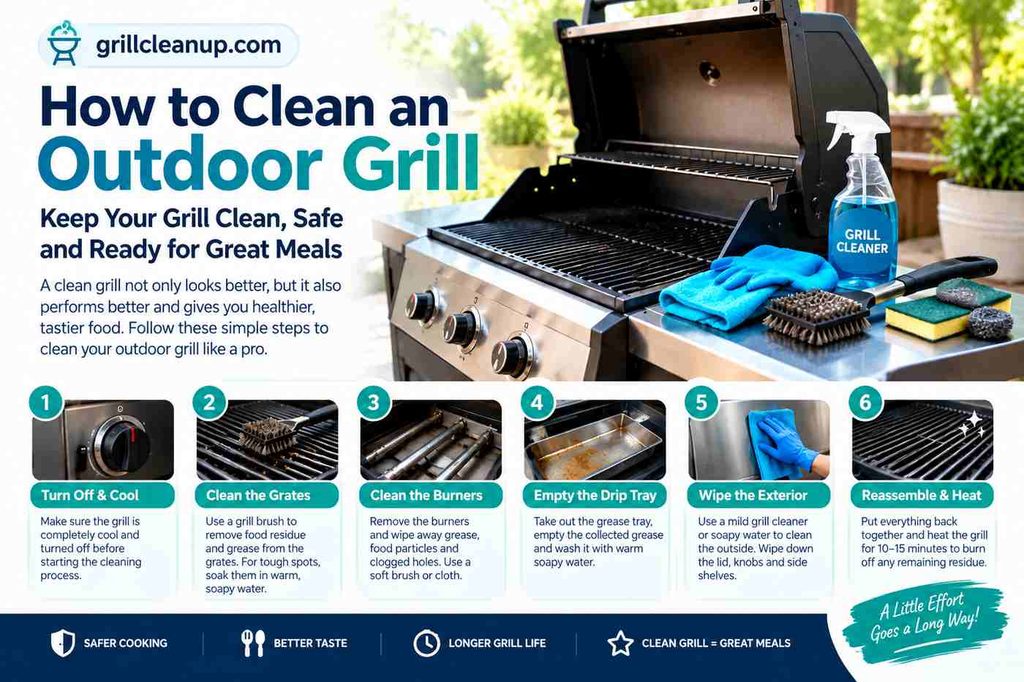
4. Clean the Burner Area Carefully
Gas grill burners need special attention.
Look for food particles, grease, or debris around the burner area. Use a soft brush or suitable cleaning tool to remove loose material.
Be careful not to damage burner holes or force debris into them. Do not aggressively scrape or poke components if the manufacturer’s instructions advise against it.
If the burners appear damaged, badly corroded, or blocked, consult the grill manufacturer’s instructions before using the grill again.
A clean burner area can also help you notice potential problems before they become more serious.
5. Empty and Clean the Grease Tray
The grease tray is one of the most important parts of an outdoor grill to maintain.
Remove the tray according to your grill’s instructions and carefully dispose of the accumulated grease and debris. Never pour cooking grease down a household drain.
Scrape away hardened residue and wash the tray with warm, soapy water if the manufacturer allows it.
Dry the tray thoroughly before putting it back.
A neglected grease tray can become heavily coated with old grease, so checking it regularly is a simple way to reduce the chance of unwanted flare-ups.
6. Clean the Exterior
After cleaning the inside, move to the outside of the grill.
Use warm water and a small amount of dish soap for many painted or coated surfaces. Wipe away grease, fingerprints, dust, and food splashes with a soft cloth.
For stainless steel surfaces, use a cleaner specifically intended for stainless steel if necessary. Avoid abrasive materials that can scratch the finish.
If your grill has a painted or powder-coated surface, follow the manufacturer’s cleaning recommendations.
Remember that different finishes require different care. A cleaning method that works well on stainless steel may not be appropriate for another material.
7. Clean the Grill Lid
The inside of the lid can collect smoke residue and grease over time.
With the grill cool, wipe away loose particles and clean the surface using an appropriate method for your grill.
Do not scrape aggressively if the lid has a special coating or finish. A soft cloth or sponge is usually enough for light buildup.
If you see a thick, flaky layer of residue, gently remove loose material and clean the surface rather than allowing flakes to fall onto your food.
8. Wash, Dry, and Reassemble Everything
Before putting the grill back together, make sure the removable components are clean and completely dry.
Moisture left on metal parts can contribute to corrosion over time.
Replace the grates, grease tray, heat shields, and other components in their correct positions. If you are unsure where a part belongs, check the owner’s manual rather than guessing.
Once everything is assembled, inspect the grill briefly before your next cooking session.
How to Clean Grill Grates Properly
The cooking grates deserve special attention because they come directly into contact with your food.
For regular cleaning, brush the grates after cooking once they have cooled to a safe temperature.
For deeper cleaning, use warm soapy water when appropriate for the grate material.
Cast-Iron Grates
Cast-iron grates require a little more care because moisture can contribute to rust.
After cleaning, dry them thoroughly. Depending on the manufacturer’s recommendations, applying a light coating of cooking oil can help maintain the surface.
Avoid leaving cast iron wet for extended periods.
Stainless Steel Grates
Stainless steel grates can generally be cleaned with a suitable grill brush or non-abrasive cleaning tool.
Avoid using harsh abrasive materials that may scratch the surface.
If food is stuck firmly to the grates, soaking or using warm soapy water may make the job easier.
How to Remove Burnt-On Grease From an Outdoor Grill
Burnt-on grease is one of the most frustrating parts of grill cleaning, but patience usually works better than aggressive scrubbing.
Start by removing loose debris with a scraper. Then use warm water and dish soap on removable parts that are safe to soak.
For stubborn buildup:
- Allow the part to soak if the manufacturer permits it.
- Scrape softened residue gently.
- Scrub with an appropriate brush or sponge.
- Rinse thoroughly.
- Dry completely.
Do not mix different cleaning chemicals together. More powerful does not always mean better, and some products can damage grill surfaces or create dangerous fumes.
How to Clean a Charcoal Grill
Cleaning a charcoal grill is slightly different from cleaning a gas grill.
First, make absolutely sure all charcoal and ash are completely cool. Remove the old ash from the bottom of the grill and dispose of it safely.
Brush food debris from the cooking grate and clean it using a method suitable for its material.
Then remove loose debris from the bottom of the grill. A small brush or suitable scraper can help.
Check the air vents and make sure they are not blocked by excessive ash or debris. Proper airflow is important for charcoal cooking.
Do not leave large amounts of old ash sitting inside the grill between uses, especially if moisture can reach it.
How to Clean a Gas Grill
Gas grills benefit from regular maintenance because grease and food particles can accumulate around the burners and heat distribution components.
After shutting off the gas and allowing the grill to cool, remove the grates and clean the cooking area.
Inspect the burners and surrounding components for buildup or damage. Clean only according to the grill manufacturer’s recommendations.
Also check the grease management system and clean the grease tray regularly.
If you notice unusual flames, uneven heating, damaged burners, or problems with the gas connection, stop using the grill until the issue has been properly inspected.
Common Outdoor Grill Cleaning Mistakes
Cleaning a grill is straightforward, but a few mistakes can cause damage or create unnecessary safety problems.
Using the Wrong Brush
Not every brush is suitable for every type of grill grate. Choose a cleaning tool appropriate for your grate material and follow the manufacturer’s recommendations.
Cleaning With Harsh Chemicals
Avoid using random household chemicals inside the cooking area. Some products may leave residues or damage surfaces.
Ignoring the Grease Tray
A clean cooking grate does not mean the whole grill is clean. The grease tray also needs regular attention.
Forgetting to Dry Metal Parts
Leaving cleaned metal components wet can encourage corrosion, particularly with materials that are vulnerable to rust.
Scraping Too Aggressively
Heavy pressure can damage coatings, finishes, or delicate components. When buildup is stubborn, soaking and gentle repeated cleaning is often safer.
Cleaning Only When There Is a Problem
Waiting until the grill is extremely dirty makes the job much harder. Small cleaning sessions after cooking can prevent heavy buildup.
Tips to Keep Your Outdoor Grill Cleaner for Longer
Once you know how to clean outdoor grill surfaces properly, the next step is keeping them clean.
A few simple habits can reduce the amount of deep cleaning you need to do.
- Brush the cooking grates regularly.
- Empty the grease tray before it becomes heavily filled.
- Clean food spills before they become hardened buildup.
- Keep the grill covered when it is not being used.
- Store removable accessories properly.
- Check for grease accumulation regularly.
- Clean ash from charcoal grills after it has completely cooled.
- Follow the manufacturer’s maintenance instructions.
- Inspect burners and other important components periodically.
A good grill cover can help protect the exterior from rain, dirt, and debris, but the cover itself should also be kept reasonably clean and dry.
When Should You Replace a Grill Part?
Cleaning can restore many dirty grill components, but cleaning cannot repair everything.
Consider replacing a component if it is severely rusted, cracked, damaged, or no longer functioning correctly.
For gas grills, damaged burners and other gas-related components deserve particular attention. Use replacement parts that are compatible with your grill model.
If you are unsure whether a component is safe to continue using, check the manufacturer’s guidance or have it inspected by a qualified professional.
Frequently Asked Questions
Can I use dish soap to clean an outdoor grill?
Dish soap and warm water can be useful for cleaning many removable grill components and exterior surfaces. However, always check the manufacturer’s instructions, particularly for special coatings and specific grate materials.
Should I clean my grill after every use?
A quick cleaning after each use is a good habit. Remove leftover food and brush the cooking grates regularly. A deeper cleaning can be done periodically depending on how frequently you use the grill.
Can I pressure wash my outdoor grill?
Pressure washing can potentially force water into burners, electrical components, bearings, and other areas where moisture may cause problems. Unless the manufacturer specifically recommends it, a controlled manual cleaning method is safer.
How do I clean a grill that has not been used for a long time?
Start by removing loose debris and checking the grill for rust, grease buildup, damaged components, and signs of pests. Clean the removable parts and interior carefully, then inspect the grill before using it again.
How do I remove grease from a grill?
Scrape away heavy buildup first, then clean suitable removable components with warm water and dish soap. A grill-safe degreaser can be used when appropriate, but follow the product and grill manufacturer’s instructions.
How do I prevent my grill from getting dirty so quickly?
Clean the grates regularly, remove grease from the grease tray, clean spills before they harden, and keep the grill covered when it is not being used. Regular small cleanups are much easier than occasional heavy cleaning.
Final Thoughts
Learning how to clean an outdoor grill does not require complicated equipment or hours of hard work. The most effective approach is to clean the grill regularly, remove grease before it becomes excessive, and treat each component according to its material and the manufacturer’s instructions.
Start with the cooking grates, clear away debris from the inside, clean the grease tray, inspect the burners or charcoal area, and finish by wiping down the exterior. Always let hot components cool to a safe temperature before deep cleaning, and take extra care around gas and electrical parts.
With consistent maintenance, your outdoor grill can stay cleaner, perform more reliably, and be ready for your next barbecue without a major cleaning job every time.