A propane BBQ grill can make weekend cooking a lot easier. You turn it on, let it heat up, throw on the food, and dinner is ready before you know it. The problem usually starts after the meal. A little grease stays behind, bits of food fall through the grates, and smoke leaves a layer of dark residue inside the grill. After several cookouts, all of that can turn into a sticky, messy buildup.
That does not mean you need to spend hours scrubbing your grill every weekend. A quick cleanup after cooking, followed by a more thorough cleaning from time to time, is usually enough to keep things under control. If your grill has been neglected for a while, though, it is worth giving every part a proper look.
If you are wondering how to clean a propane BBQ grill, this guide walks you through the whole process in a simple order. You will learn what to clean, which parts need extra care, what supplies you actually need, and which common cleaning mistakes are better avoided.
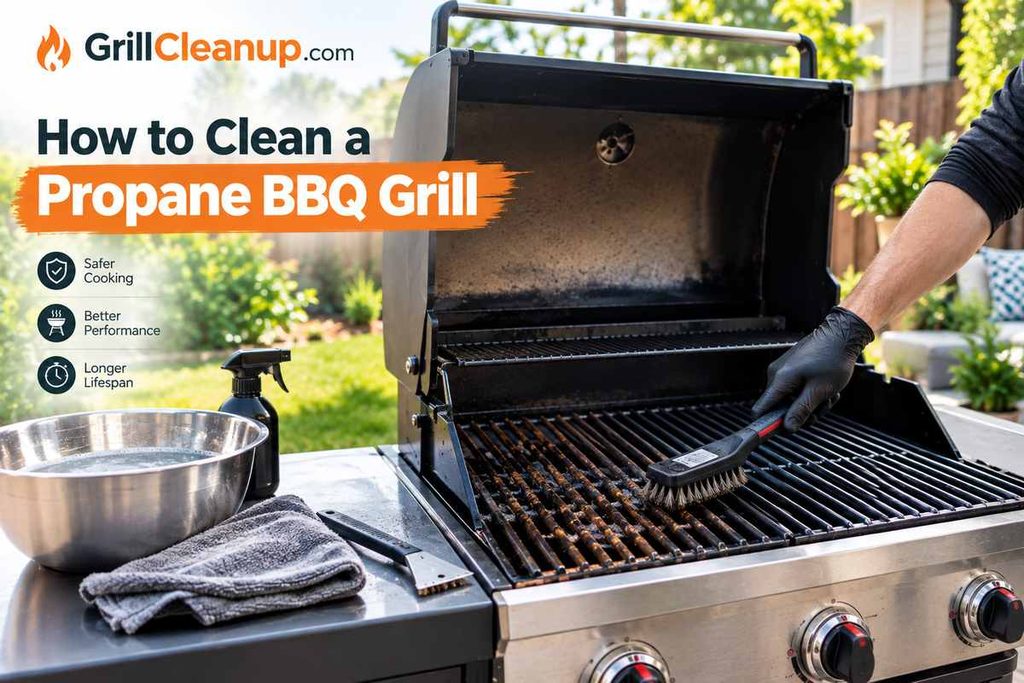
Propane grills need regular cleaning to keep grease and food residue from building up. If you have a different type of gas grill, you can also learn [how to clean a gas grill] with a similar step-by-step approach.
What You Need to Clean a Propane BBQ Grill
You do not need a cupboard full of expensive grill-cleaning products. Most of the job can be done with a few basic things you probably already have at home.
Before getting started, grab a grill brush, a plastic scraper, some mild dish soap, warm water, a sponge or old cloth, paper towels, and a pair of cleaning gloves. A small soft brush can also be handy for getting into narrow areas around the burners and other parts.
The cleaning products you choose should also match the material of your grill. Cast iron, stainless steel, porcelain-coated grates, painted metal, and plastic parts can all react differently to cleaners and rough tools. When you are unsure, stick with a mild cleaner and check the instructions that came with your grill.
Avoid reaching for a strong chemical just because the grease looks stubborn. A rough scrubber or harsh cleaner can leave scratches or damage a finish that is otherwise perfectly fine.
Basic Cleaning Supplies
- Grill brush
- Plastic scraper
- Mild dish soap
- Warm water
- Sponge or soft cloth
- Paper towels
- Cleaning gloves
- Small soft brush
- Grill-safe cleaner, if needed
Having everything nearby makes the job much easier. There is nothing more annoying than getting halfway through a dirty grill and realizing you need to stop because you are missing something.
Let the Grill Cool Completely
Before you touch anything inside the grill, turn off the burners and shut off the propane supply. If you are doing a full deep clean, follow your grill manufacturer’s instructions for disconnecting the propane tank.
Give the grill plenty of time to cool down. It can still hold a surprising amount of heat even when the outside feels manageable.
Hot grease is especially dangerous because it can cause serious burns. Cleaning products should also not be sprayed or spread over very hot surfaces.
It is best to clean the grill outdoors in an open area with good airflow. While you are getting everything ready, take a quick look at the propane hose and visible connections. If you notice a damaged hose, cracked fitting, or smell of propane, do not continue with normal grill use until the gas issue has been dealt with.
Remove and Clean the Cooking Grates
Start with the cooking grates because they are usually the dirtiest part of the grill and the easiest place to begin.
Take the grates out and give them a good look. If there are loose pieces of food or burnt material stuck to them, brush those away first. A proper grill brush can make quick work of light buildup.
For heavier grease, warm soapy water can help loosen the mess if your grill manufacturer allows it. Let the grates sit for a while rather than trying to scrape everything off with force.
The type of grate matters here. Cast-iron grates need a little more attention because leaving them wet can encourage rust. Porcelain-coated grates can also be scratched if you use an overly aggressive scraper.
Once the grates are clean, rinse them when appropriate and dry them thoroughly. Do not put wet grates straight back into the grill.
A Quick Tip for Stubborn Grates
If the grease has hardened into a thick layer, do not keep attacking it with a brush for 20 minutes. Soaking the grates first can soften the buildup and save you a lot of effort.
The easiest cleaning job is the one where you let the cleaner or warm water do some of the work for you.
Clean the Inside of the Grill Lid
Now look underneath the lid. You may notice a layer of black or brown material that looks worse than you expected.
Some of this is normal. Smoke and grease naturally collect on the underside of the lid as you cook. Over time, however, pieces of that buildup can become loose and fall onto your food.
Use a suitable scraper or grill brush to remove loose carbon and greasy residue. Once you have knocked the larger pieces away, wipe the surface with a damp cloth or paper towel.
You do not need to make the lid look factory-new. Focus on getting rid of loose flakes and heavy buildup. A few dark stains that remain after cleaning are not necessarily a problem.
Remove and Clean the Heat Deflectors
Under the cooking grates, you will usually find heat deflectors, flavorizer bars, heat tents, or similar parts. The exact design depends on the grill.
These pieces sit directly above the burners, so they naturally collect grease and food drippings. Remove them carefully and scrape away any thick buildup you find.
A plastic scraper is useful here because it can lift old grease without being unnecessarily harsh on the surface. After scraping, brush off the remaining loose material.
Do not worry if these parts still look discolored after cleaning. They spend a lot of time exposed to high temperatures, smoke, and grease. What matters is removing excessive buildup and keeping the parts in usable condition.
If one of the heat shields is badly rusted, damaged, or deteriorated, check your grill’s manual to see whether it should be replaced.
Clean the Burner Tubes Carefully
The burners deserve more care than the cooking grates. They have small openings that allow the gas to come through, and those openings need to remain clear.
Once the grill is cool, inspect the burner area for grease, food debris, dust, or anything else that does not belong there. Use a clean, suitable brush to remove loose material.
Be gentle around the burner ports and ignition system. Do not poke a knife, pin, screwdriver, or other sharp object into the small holes. You could damage the burner or change the size of the openings.
If your grill has removable burners, do not take them apart unless the manufacturer’s instructions explain how to do it safely.
This is also a good time to look for obvious signs of rust or damage. If a burner appears badly damaged, replacing it may be safer than trying to repair it yourself.
Scrape the Bottom of the Cookbox
With the grates and heat deflectors out of the way, you can finally see what has collected at the bottom of the grill.
This is often where the biggest surprise is hiding.
Old grease, burnt food, carbon, and crumbs can build up down there for months. Take a plastic scraper and work around the bottom and sides of the cookbox. Push the loose material toward the grease collection area.
You are not trying to make every inch spotless. The main goal is to get rid of thick grease and large amounts of loose debris.
If the buildup is particularly heavy, work slowly and remove it in small amounts. Trying to scrape everything at once can make a bigger mess.
Once the heavy material is gone, use a little mild soap if appropriate for your grill.
Empty the Grease Tray.
Do not skip the grease tray.
It is easy to forget because it sits underneath the main cooking area, but it can collect a lot of fat and cooking residue. A tray that is nearly full is not something you want to ignore.
Remove it carefully. Old grease can move around even when it looks solid, so keep the tray level as you carry it.
Scrape out any solid material first. Then wash the tray with warm soapy water if it is designed to be washed. Rinse and dry it before putting it back.
Never pour a large amount of cooking grease into your sink. It can cause problems in household plumbing. Let grease cool and dispose of it in a suitable way according to local waste rules.
Check the Drip Pan Too
If your propane grill has a separate drip or catch pan, inspect that part at the same time.
A disposable liner can usually be replaced when it becomes dirty, while reusable pans should be cleaned according to the manufacturer’s instructions.
This takes only a few minutes, but it can prevent a nasty surprise the next time you start cooking.
Wipe Down the Outside
Once the inside is under control, give the outside of the grill a quick cleanup.
Grease splashes, dust, fingerprints, and weather can leave the exterior looking dull. Fortunately, this part is usually much easier than cleaning the inside.
For most surfaces, warm water, mild dish soap, and a soft cloth are enough. If your grill has stainless steel, wipe with the grain rather than scrubbing in random directions.
Avoid rough scouring pads unless the manufacturer specifically says they are safe for that surface. You do not want to trade a grease mark for a collection of scratches.
Once you are finished, wipe the outside dry with a clean cloth.
Dry Everything and Put the Grill Back Together
Before reassembling your BBQ, make sure the parts you washed are completely dry.
Put the burners, heat deflectors, cooking grates, grease tray, and other removable parts back where they belong. If you are not sure where a particular part goes, check the grill manual instead of guessing.
A propane grill is designed around the position of its internal components, so everything should sit properly before you turn it back on.
Take one final look inside. Check that you have not left a cleaning cloth, scraper, paper towel, or loose piece of debris in the cookbox.
Check the Propane Hose and Connections
A deep cleaning is a convenient time to inspect the propane system.
Look over the hose and visible connections for obvious damage. You are looking for things such as cuts, cracks, severe wear, or anything that looks different from normal.
If you smell propane or think there may be a leak, stop and do not use the grill until the issue has been properly checked.
Never treat a suspected gas leak as just another cleaning problem. A dirty grill can wait. A gas-safety issue needs attention first.
How Often Should You Clean a Propane BBQ Grill?
There is no single cleaning schedule that works for every grill. Someone who cooks burgers and steaks several times a week will naturally need to clean more often than someone who uses the BBQ once a month.
The easiest habit is to do a small cleanup after every cooking session. Brush the grates, check the grease tray, and remove obvious food residue before putting the grill away.
A deeper cleaning can be done several times throughout the year, depending on how often you use the grill and how dirty it gets.
| Cleaning Task | When to Do It |
|---|---|
| Brush cooking grates | After cooking |
| Check grease tray | Regularly |
| Wipe obvious grease | As needed |
| Inspect burner area | Regularly |
| Clean cookbox | When buildup becomes noticeable |
| Deep clean entire grill | Several times a year |
| Check propane hose | During routine maintenance |
If your grill starts producing unusual amounts of smoke, develops frequent flare-ups, heats unevenly, or has a lot of grease buildup, it is probably time for a deeper clean.
Common Grill Cleaning Mistakes
One of the easiest mistakes is focusing only on the grates. They are the part you see, but plenty of grease can be hiding underneath them.
Another mistake is being too aggressive with the burners. Sharp tools may seem useful when you see blocked holes, but forcing objects into burner ports can cause damage.
Using the wrong cleaning product can also create problems. A cleaner that works perfectly on one material may damage another. When in doubt, check the manufacturer’s instructions first.
Try to avoid these common mistakes:
- Cleaning the grill while it is dangerously hot
- Ignoring the grease tray
- Using sharp objects on burner ports
- Scrubbing delicate finishes with rough pads
- Spraying large amounts of water inside the grill
- Using strong chemicals without checking the instructions
- Putting wet parts back into the grill
- Ignoring a damaged propane hose
- Forgetting to check the drip pan
You do not need to attack the grill with every cleaning product you own. In most cases, a little patience and the right basic tools work better.
How to Keep Your Propane Grill Cleaner
The best way to make deep cleaning easier is to avoid letting the mess build up in the first place.
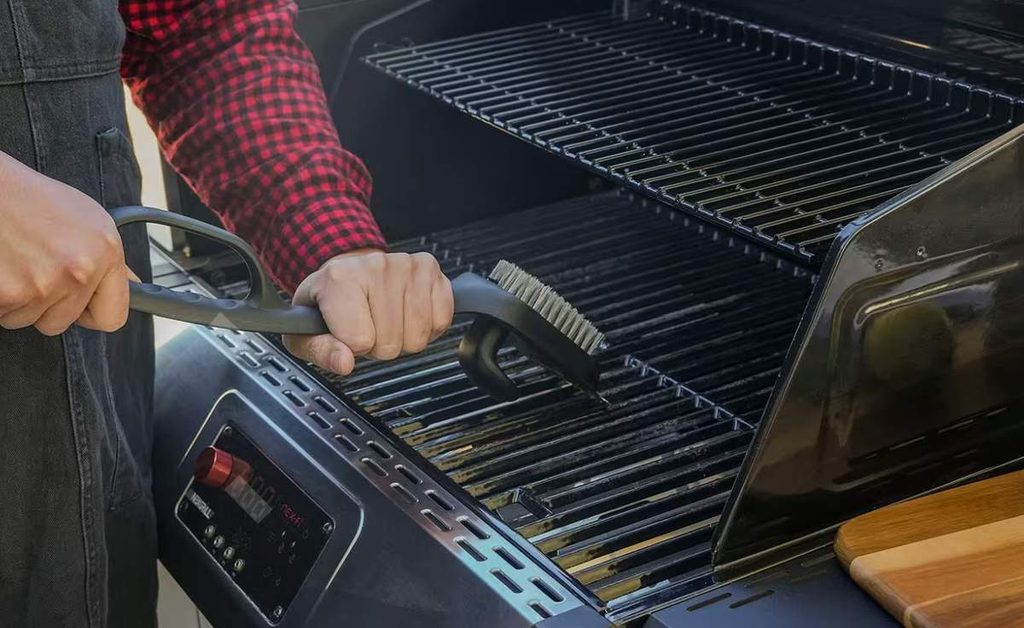
After cooking, brush the grates while following the cleaning instructions for your particular grill. Remove obvious food scraps and keep an eye on the grease tray.
If something spills heavily during cooking, deal with it once the grill is safe to clean rather than letting it sit there through several more meals.
A grill cover can also help protect the outside from rain, dust, and dirt when the BBQ is not being used. Just make sure the grill is completely cool and dry before covering it.
You do not need to spend an hour maintaining your BBQ every time you cook. A few minutes here and there can prevent a much bigger cleaning job later.
Conclusion
Learning how to clean a propane BBQ grill is much easier when you break the job into smaller parts. Start with the grates, then work your way underneath to the lid, heat deflectors, burners, cookbox, grease tray, and drip pan. Finish by wiping down the outside and checking that everything is dry and properly installed.
The trick is not to wait until your grill is covered in thick grease. A quick cleanup after cooking, combined with a deeper clean a few times a year, can make the whole process much less frustrating.
And remember, you do not need to make every part look brand new. Remove the heavy grease, clear away food and carbon buildup, keep the grease-management system clean, and pay attention to anything that looks damaged. If you are ever unsure about a particular part, your grill’s owner’s manual is the best place to check before taking it apart or using a new cleaning product.
Frequently Asked Questions
Can I clean a propane BBQ grill while it is warm?
It is safer to wait until the grill has cooled completely before doing a thorough cleaning. Warm surfaces and leftover grease can cause burns, and cleaning products should not be used on surfaces that are too hot.
What is the easiest way to clean propane grill grates?
Start by brushing off loose food and carbon. If the buildup is stubborn, soak the grates in warm soapy water when the manufacturer says it is safe for that grate material. Scrub gently, rinse when appropriate, and dry the grates completely before putting them back.
How often should I deep clean my propane BBQ?
It depends on how often you use it. If you cook several times a week, you will probably need to clean it more deeply more often than someone who only uses the grill occasionally. In general, check the grease and internal components regularly and give the entire grill a thorough cleaning several times a year.
What should I do if my propane grill smells like gas?
Turn off the propane supply and do not use the grill until the suspected leak has been properly addressed. Check the manufacturer’s safety instructions or contact a qualified professional if necessary. A propane leak should never be treated as a normal cleaning issue.