
There’s a particular kind of disappointment that comes from lifting a perfectly marinated steak off the grill and tasting last weekend’s sausages. The grates were the culprit, and you probably knew it the moment you spotted that black, flaky crust before you even lit the burners.
The fix is less work than most people expect. Knowing how to clean BBQ grates comes down to one short habit after every cook and a proper scrub now and then. Below you’ll find both, plus what to do for different grate materials, a few tricks from the kitchen cupboard, the mistakes that quietly wreck grills, and some ways to stop the mess from coming back. Gas, charcoal, or pellet—the basics hold for all of them.
What You Need
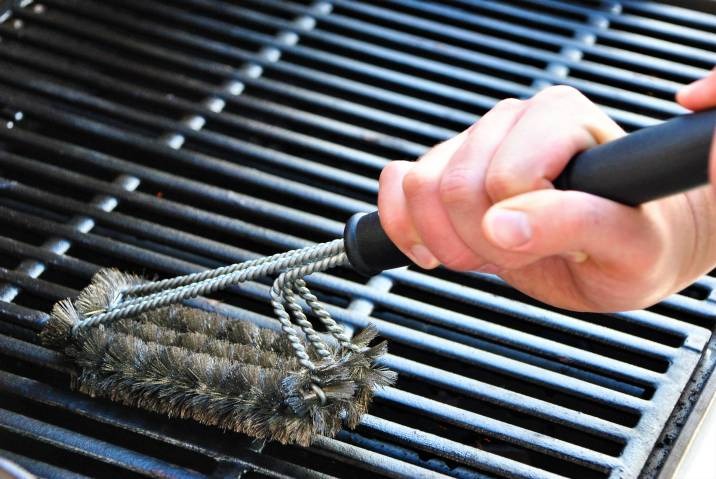
You don’t need a shelf of specialty products. A decent grill brush or a bristle-free scraper, dish soap, baking soda. Add a tub or heavy-duty trash bag big enough for soaking, a non-scratch scrubbing pad, some paper towels, and a bottle of high smoke point oil like canola or avocado. Heat-resistant gloves and long tongs are worth having nearby too.
One warning about brushes. Wire bristles loosen with age and can end up in your food, which sends people to the emergency room more often than you’d think. Look your brush over before each use and toss it the moment it starts shedding, or switch to a coil or scraper style with no loose bristles at all.
How to Clean BBQ Grates With Baking Soda
Sometimes the quick routine isn’t enough. Maybe it’s the first warm weekend of the year, or the grates have been ignored since July. A soak does most of the work for you.
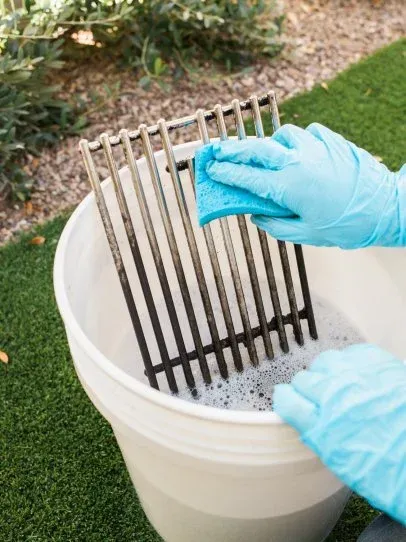
Wait until the grill is fully cool and the gas is off, then lift the grates out and carry them somewhere you don’t mind making a mess, like the driveway or the lawn. Knock off the loose, flaky material with a scraper first so the soak can reach the baked-on layer underneath.
Fill a tub or heavy-duty trash bag with warm water, add a good squirt of dish soap and roughly half a cup of baking soda, and slide the grates in until they’re covered. Give them thirty minutes to an hour. If the carbon is really thick, an overnight soak is fine.
Before the next cookout, run the grill on high for ten minutes. That burns off any leftover water or soap, so your first burgers don’t taste like dish liquid.
If your grill has heavy grease buildup, professional grill cleaning services can help restore its condition.
Cleaning Different Types of Grill Grates
| Grate Type | Good Tools | Avoid These |
|---|---|---|
| Cast Iron | Stiff brush, scraper, warm water, a little oil afterward | Long soaks, dishwasher, air-drying |
| Stainless Steel | Brush or scraper, dish soap, baking soda paste | Harsh abrasives, scrubbing across the grain |
| Porcelain-Coated | Nylon brush, soft scrubber, mild soap | Metal scrapers, steel wool, cold water on hot grates |
| Chrome or Plated | Soft brush, dish soap, and water | Hard scraping that strips the coating |
Cast iron holds heat beautifully and rusts if you look at it wrong. Clean it while it’s still warm, scrub gently, rinse quickly, and dry right away. Follow with a thin coat of oil to protect the seasoning. If rust has already shown up, scrub it off, wash, dry, and re-season with oil and heat.
Stainless steel is the forgiving one. A baking soda paste or the soak above works fine, and you’ll get better results scrubbing in the direction of the bars rather than across them.
Porcelain-coated grates clean up easily but chip if you attack them with metal. Once the enamel cracks, rust gets underneath and spreads, so stick to nylon brushes and soft pads, and let hot grates cool before you rinse them.
How Often to Clean Your Grill Grates
| When | What to Do |
|---|---|
| After Every Cook | Burn off residue, brush the grates, and apply a light coat of oil. |
| Every 4–6 cookouts | Wash the grates with soap and warm water, and empty the grease tray. |
| Start of the Season | Deep clean the grates, burners, drip tray, and inside of the lid. |
| End of the Season | Deep clean the grill, dry thoroughly, and oil the grates before covering it. |
Cooking fatty food like burgers and ribs every other day? Shorten those intervals. The more grease your grill sees, the sooner it needs attention.
Keeping Grates Clean Between Cleanings
A few small habits make every future cleaning easier. Brush a thin coat of high smoke point oil onto preheated grates before you cook; it forms a light barrier that cuts down on sticking. Give the grill ten to fifteen minutes to reach temperature so food sears instead of gluing itself to the metal.
What you put on the grill matters too. Pat the meat dry and wipe off the thick marinade, because drips burn. Sugary sauces scorch fast, so brush them on during the last few minutes. Empty the grease tray regularly and keep a fitted cover on the grill. It blocks rain, pollen, and dust, and it slows down rust.
Frequently Asked Questions
Can grill grates go in the dishwasher? Sometimes. Certain stainless steel grates are dishwasher-safe, but cast iron and porcelain-coated ones never are. Check your manual first, and keep in mind that a dishwasher rarely lifts heavy carbon anyway.
Is it safe to cook on rusty grates? A light film of surface rust can be scrubbed off, washed, dried, and re-oiled. If the metal is pitted, flaking, or deeply corroded, replace the grates.
Should I clean before or after cooking? Both, in different ways. A quick preheat and brush before you cook clears dust and old debris, and the proper clean happens right after you finish, while the grates are still warm.
What’s the fastest way to deal with very dirty grates? Start with a burn-off, follow with a soak in warm, soapy water and baking soda, and then scrub with a stiff brush. That combination is the most reliable for neglected grates.
Do I need a special grill cleaner? Usually not. Dish soap, baking soda. If you do buy a commercial cleaner, pick one labeled safe for food-contact surfaces and rinse it off thoroughly.
Conclusion
Grill cleaning isn’t glamorous, but it’s one of those jobs that gets easier the less you put it off. A hot brush after dinner, a bit of oil, and a proper soak when the season starts, or the crust gets out of hand. That’s really all there is to it.
Get used to that rhythm, and cleaning BBQ grates stops being something you search for in the middle of a cookout. Your steaks will sear properly, your fish will come off in one piece, and the grill will be ready the next time you feel like cooking outside.
Regular BBQ grill maintenance helps prevent grease buildup and keeps your grill ready for the next cookout.