
A dirty grill can ruin an otherwise great cookout. Old grease can make food taste burnt, leftover food particles can stick to fresh ingredients, and clogged burners can affect how evenly your grill heats. The longer you leave that mess behind, the harder it becomes to remove.
The best approach is to clean your grill a little at a time instead of waiting until grease and carbon buildup become a serious problem. Some jobs take only a few minutes after cooking, while a deeper cleaning every so often helps you deal with the areas that are easy to overlook.
1. Clean Your Grill at the Right Time
Timing makes a noticeable difference when cleaning a BBQ grill. Grease and food residue are usually easier to remove while they’re still warm than after they’ve hardened completely.
You don’t need to perform a complete deep cleaning after every meal. A quick cleanup is usually enough to prevent everyday mess from turning into thick, stubborn buildup.
Keep these basic habits in mind:
- After every cookout: Remove loose food particles and excess grease.
- Every few uses: Inspect the grates, grease tray, and other areas for buildup.
- Periodically: Give the grill a deeper cleaning, including accessible internal surfaces and burner components where appropriate.
- Before the grilling season: Check the entire unit for rust, damaged parts, blocked burners, and signs of pests.
The exact schedule depends on how often you cook, what you prepare, and the type of grill you own. Fatty foods such as burgers and sausages can leave more grease behind than lean meats or vegetables.
2. Gather the Right BBQ Grill Cleaning Tools
You can make grill cleaning much easier by keeping a small collection of supplies near your outdoor cooking area. Having everything ready prevents you from stopping halfway through the job to look for another tool.
Here’s what you’ll commonly need:
Cleaning tool
BBQ Grill Cleaning Tools
| Cleaning Tool | What It’s Used For |
|---|---|
| Grill brush | Removing stuck-on food and loose debris |
| Soft sponge | Cleaning grill grates and exterior surfaces |
| Plastic scraper | Removing hardened grease |
| Mild dish soap | Removing grease and food residue |
| Warm water | Loosening dirt and rinsing removable parts |
| Microfiber cloth | Wiping down exterior surfaces |
| Disposable gloves | Keeping grease off your hands |
| Small flashlight | Checking dark areas inside the grill |
Choose your tools according to the grill manufacturer’s instructions. Stainless steel, porcelain-coated, and cast-iron grates don’t all require the same treatment.
3. Brush the Cooking Grates Properly
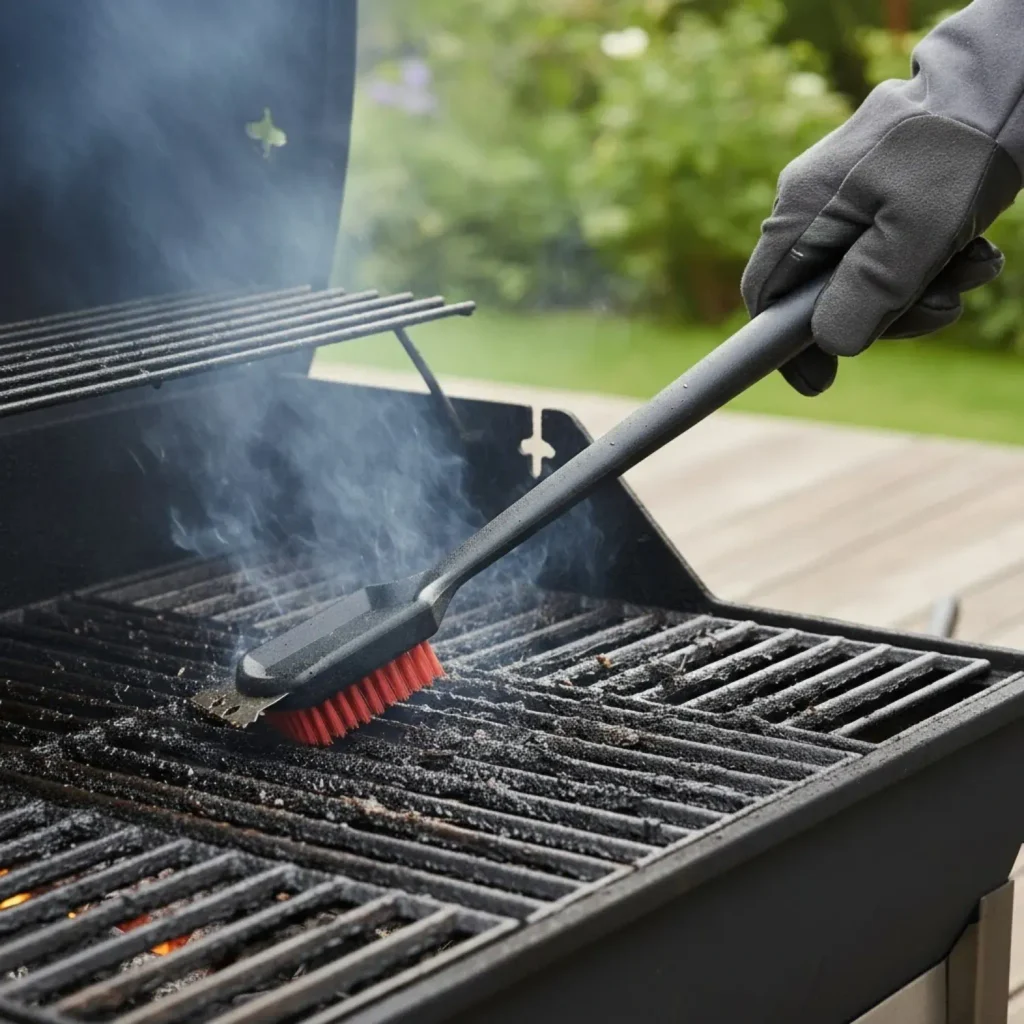
The cooking grates collect most of the food residue, so they deserve attention after every grilling session. A quick brush can prevent small bits of meat, sauce, and vegetables from building into a thick layer.
Start by checking the manufacturer’s recommended cleaning procedure. Some grills allow brushing while the grates are warm, while others require a different approach depending on the material.
If the grates are safe to handle and need a more thorough wash, remove them and clean them separately.
How to clean BBQ grill grates.
- Remove loose debris. Use an appropriate grill brush or scraper to lift food particles from the grate.
- Soak removable grates if needed. Place suitable grates in warm water with a small amount of dish soap. Check the manufacturer’s instructions before soaking cast iron or other sensitive materials.
- Scrub the remaining residue. Use a nonabrasive pad or suitable brush to remove grease and stuck-on food.
- Rinse thoroughly. Remove soap and loosened debris from the grates.
- Dry completely. Dry the grates before reinstalling them, particularly if they’re made from cast iron or another material that can rust.
4. Remove Grease From Inside the Grill
Cleaning the visible cooking surface is only part of the job. Grease, ash, and food particles can collect beneath the grates, around heat deflectors, and along the bottom of the grill.
When this buildup becomes excessive, it can create unpleasant odors and increase the risk of flare-ups. A grill that suddenly produces large flames while cooking fatty foods may have accumulated more grease than it can safely handle.
Before cleaning the interior, turn off the grill and let it cool completely. For gas models, shut off the gas supply as directed by the manufacturer. Never start scraping inside a hot grill.
Remove the cooking grates and any removable components that the manual identifies as safe to take out. Use a plastic scraper to lift hardened grease, then collect the debris with a suitable brush or dustpan.
Pay attention to the corners and edges where grease tends to accumulate. You don’t need to make every interior surface look brand-new, especially if the grill has seasoned or darkened surfaces. The goal is to remove excessive grease and loose debris without damaging protective coatings.
Avoid spraying water directly onto burners, ignition systems, electrical components, or other sensitive parts. If the manufacturer permits washing a particular component, clean it separately and let it dry completely before reinstalling it.
For a deeper clean of the burners, firebox and grease tray, follow our step-by-step guide on cleaning inside of gas grill.
5. Empty and Clean the Grease Tray
The grease tray is one of the easiest parts of a BBQ grill to forget. It collects drippings during cooking, and when it becomes too full, grease may spill or contribute to flare-ups.
Check the tray regularly, especially after cooking burgers, ribs, chicken thighs, or other fatty foods.
Follow this simple routine:
- Make sure the grill is completely cool.
- Remove the grease tray or cup according to the manual.
- Dispose of the collected grease in a suitable container.
- Scrape away hardened residue with a plastic scraper.
- Wash removable, washable parts with warm water and dish soap.
- Dry the components and reinstall them correctly.
Never pour grease down a household drain. It can cool, solidify, and contribute to clogged plumbing. Let it cool and dispose of it according to local waste guidelines.
Some grills use disposable grease liners. If yours does, use the recommended size and material. An incorrectly fitted liner can interfere with drainage or sit too close to hot components.
Don’t cover burner openings or ventilation areas with aluminum foil unless the manufacturer specifically permits the practice. Improperly placed foil can interfere with airflow and heat distribution.
6. Use Different Cleaning Methods for Gas and Charcoal Grills
Gas and charcoal grills share some cleaning needs, but their internal components require different care. Using the wrong method can damage parts or create unnecessary safety risks.
Cleaning a gas or propane line BBQ grill
Gas grills have burners, ignition systems, heat deflectors, and grease channels that need periodic inspection.
After turning off the gas and allowing the grill to cool, remove the grates and accessible heat deflectors as instructed by the manufacturer. Clean grease from the removable components and check the burner ports for visible blockages.
Don’t poke sharp metal objects into burner openings unless the manufacturer specifically recommends an appropriate cleaning tool. Enlarging or damaging a burner port can affect how the grill operates.
Inspect hoses and connections for visible damage. If you smell gas, hear an unusual hissing sound, or suspect a leak, stop using the grill, shut off the gas if you can do so safely, and follow the manufacturer’s emergency guidance. Never use a flame to check for leaks.
Cleaning a charcoal grill
Charcoal grills produce ash, which can collect beneath the charcoal grate and restrict airflow.
Wait until the charcoal and ash are completely cold before removing them. Ash can retain heat longer than expected, so don’t assume it’s safe just because the grill looks inactive.
Dispose of the cold ash in accordance with the grill manufacturer’s instructions and local requirements. Clean the cooking grate, charcoal grate, and ash catcher where fitted.
Check the air vents for accumulated ash and debris. Clear airflow helps you control the temperature during your next cookout.
If your charcoal grill has a porcelain-coated bowl or lid, use nonabrasive tools to avoid scratching the finish.

7. Clean the Grill Exterior Without Damaging It
A clean exterior makes your grill look better, but the wrong cleaner can leave streaks, dull the finish, or damage painted surfaces.
For most routine cleaning, a soft cloth, warm water, and a little mild dish soap are enough. Wipe away grease splashes, fingerprints, and food residue, then use a clean, damp cloth to remove soap.
The best method depends on the material.
- Stainless steel: Use a cleaner approved for the finish and wipe in the direction of the grain when applicable.
- Painted metal: Use a soft cloth and mild soap. Avoid abrasive pads that may scratch the coating.
- Porcelain enamel: Clean gently and avoid hard impacts that could chip the surface.
- Plastic handles and control knobs: Use a damp cloth and a suitable mild cleaner, keeping moisture away from electrical components.
Don’t assume a product labeled as a general-purpose degreaser is safe for every grill surface. Read its label and check the grill manual before using it.
After cleaning, dry the exterior to reduce water spots and help prevent corrosion around exposed metal parts.
8. Try Simple Cleaning Solutions for Stubborn Grease
You don’t always need a specialty grill cleaner to handle ordinary grease. Warm water and dish soap work well for many removable components, while a suitable plastic scraper can help lift hardened residue.
For particularly dirty grates, a cleaner specifically designed for your grate material may save time. Follow its directions carefully, including any required contact time, rinsing, ventilation, and protective equipment.
Baking soda is another option for some washable surfaces. When mixed with a little water to form a paste, it can help loosen residue. However, its mildly abrasive texture may not be appropriate for every coating, so test cautiously and check the manufacturer’s guidance first.
Avoid combining household cleaning chemicals. Mixing bleach with acids or ammonia, for example, can release dangerous gases. Never use a chemical mixture simply because it appears to remove grease more quickly.
Be careful with vinegar, too. Although it is commonly used for household cleaning, acidic solutions may affect certain metals or finishes if used improperly or left on too long.
A practical rule: Start with the mildest suitable cleaner. Move to a stronger product only if necessary and only when it is approved for your grill.
Leaving cleaning chemicals on cooking surfaces: Residue may affect food or damage the grill. Rinse washable components thoroughly as directed by the product label.
Ignoring the grease collector: A clean cooking grate won’t solve a problem caused by a full grease tray or heavily soiled interior.
Putting a cover on a damp grill: Trapped moisture can contribute to rust and mildew. Let the grill dry before covering it.
Forgetting to inspect the grill before cooking: Cleaning is also a chance to spot loose parts, damaged hoses, rust, and blocked vents before they become bigger problems.
9. Build a Simple Grill Maintenance Routine
You don’t need to spend an entire afternoon cleaning your BBQ every week. A consistent routine is usually easier than dealing with months of neglected grease.
Use this schedule as a starting point and adjust it to your grill and cooking habits
BBQ Grill Cleaning Tips Schedule
| When | What to Do |
|---|---|
| After each use | Remove food debris and check for excess grease |
| Every few cooking sessions | Inspect grates and empty the grease collector as needed |
| Monthly during frequent use | Check interior surfaces, vents, and removable components |
| Before the grilling season | Inspect hoses, connections, burners, and other accessible parts |
| Before long-term storage | Clean thoroughly, dry completely, and follow the manufacturer’s storage instructions |
If you grill several times a week, you’ll probably need to clean the grease tray and interior more frequently than someone who cooks outdoors only occasionally.
Weather also matters. A grill kept outside in a humid or rainy environment may need more attention to moisture, rust, and its protective cover.
Keep a grill brush, plastic scraper, and microfiber cloth in one place so a quick cleanup becomes part of putting the food away. Small jobs are much easier to maintain than a major cleaning project.
Frequently Asked Questions
1. How often should I clean my BBQ grill?
Brush away food residue after each use and inspect the grease tray regularly. Give the grill a deeper cleaning every few uses or whenever you notice significant buildup. Your exact schedule depends on how frequently you cook and what type of grill you have.
2. What is the easiest way to remove grease from a BBQ grill?
For ordinary grease, start with warm water and mild dish soap on removable, washable components. Use a plastic scraper to lift hardened deposits from suitable surfaces. For stubborn residue, choose a grill cleaner approved for the material and follow its instructions.
3. Can I use vinegar to clean my grill?
Vinegar may help with some household cleaning tasks, but it isn’t suitable for every grill component or finish. Check the manufacturer’s recommendations before using it, and avoid leaving acidic solutions on metal surfaces for extended periods.
4. Should I clean my BBQ grill while it’s hot or cold?
Some grate-cleaning methods are designed for a warm grill, but deeper cleaning should generally be done after the grill has cooled completely. Always follow the manufacturer’s instructions, and never handle hot grease trays, charcoal ash, or internal components before they’re safe to touch.
Conclusion
Good BBQ grill cleaning tips don’t have to involve expensive products or complicated techniques. A few simple habits can make a real difference: clean the grates regularly, remove excess grease, empty the drip tray, and give the interior and exterior attention when needed.