You light the grill, put the burgers on, and within minutes a thick cloud of smoke is pouring out of the lid. Your neighbors can see it, your eyes are watering, and the food is starting to taste bitter. If you are asking yourself, “Why is my gas grill smoking so much?” “”You are not alone. It is one of the most common problems gas grill owners face, and the good news is that it is almost always fixable at home.
In this guide, we will walk through the nine most common reasons a gas grill produces too much smoke, how to tell which one is your problem, and exactly what to do about it. We will also cover grease fire safety, a simple deep-cleaning routine, and habits that keep your grill running clean all season.
Is Some Smoke Normal on a Gas Grill?
Before we dig into the problems, it helps to know what normal looks like. Natural gas or propane is burned in gas barbecues, which is a very clean fuel. Unlike charcoal, the flame itself produces almost no smoke. The smoke you see comes from whatever is burning on top of the flame: food, fat, oil, sauce, or old residue.
A little light, white wisp of smoke when fatty food hits the grates is completely normal. It is part of what gives grilled food its flavor. What is not normal is thick, dark, billowing smoke that keeps pouring out, smells acrid, or makes your food taste burnt. That is a sign something inside your grill needs attention.
The color of the smoke can also give you a clue. Thin white smoke usually means grease or fat vaporizing. Gray or black smoke usually means something is burning or charring, such as old carbon buildup or a grease fire starting. Keep this in mind as you read through the causes below.
1. Built-Up Grease Is the Number One Culprit
If you want a quick answer to why your gas grill is smoking so much, this is it. Grease is the most common cause by far. Every time you grill, fat drips off the food and lands on the burner covers, flavorizer bars, and the bottom of the firebox. If you do not clean it regularly, that grease builds up in layers.
When the grill heats up, all that old grease starts to burn and smoke. It can also catch fire, which brings us to the safety section later in this article. A heavy layer of old grease can produce smoke long before you even put any food on the grill.
How to fix it: Heat the grill on high for 10 to 15 minutes with the lid closed to burn off light residue. Then turn it off, let it cool, and scrape the flavorizer bars, burner covers, and the inside of the lid and firebox with a grill scraper or plastic putty knife. For heavy buildup, you will need a full deep clean, which we cover step by step below.
2. Leftover Food Residue and Carbon on the Grates
Burnt-on food bits from your last cookout do not just disappear. They turn into carbon, and carbon smokes every time it heats up. Dirty grates also make food stick, which leads to more burnt bits and more smoke.
Many people skip cleaning the grates because the grill “looks fine” after a quick brush. But carbon builds up in the tiny gaps and ridges where you cannot see it.
How to fix it: Preheat the grill, then scrub the grates with a good grill brush while they are hot. After cooking, do it again. Once or twice a season, remove the grates and soak them in warm, soapy water, then scrub them clean. Avoid cheap wire brushes with loose bristles, since bristles can break off and end up in your food. A nylon brush, a coil brush, or a grill stone are safer options.
3. Fatty Foods and Flare-Ups
Sometimes the problem is not the grill at all, but what you are cooking. Fatty cuts like chicken thighs with skin, bacon, sausages, ribs, and burgers with a high fat content drip a lot of grease. When that fat hits a hot surface, it smokes. When it hits an open flame, it flares up.
Flare-ups blacken your food and create sooty, bitter smoke that clings to everything.
How to fix it: Trim excess fat from meat before grilling. Cook fattier foods over indirect heat first, then move them over direct heat at the end for a short sear. Keep a cooler zone on the grill by leaving one burner off, so you always have a safe place to move food during a flare-up. Never spray water on a grease flare-up. It can spread the fire.
4. A Dirty Grease Tray or Drip Pan
Your gas grill has a grease tray or drip pan underneath the firebox. Its job is to catch the fat that falls through. Over time, it fills up. A full or overflowing tray can smoke on its own, and in the worst cases, the grease inside it can ignite.
Many people forget this part of the grill exists until it becomes a problem.
How to fix it: Check the grease tray before every few cookouts. Scrape out the solid grease, wash the tray with hot, soapy water and replace the disposable liner if your model uses one. If grease has built up so much that it is dripping out of the tray, deep clean the whole bottom section of the grill.
5. Sugary Sauces and Marinades
Barbecue sauce, honey glazes, teriyaki, and many marinades contain sugar. Sugar burns quickly at grill temperatures, turning black and producing a lot of smoke. If you brush sauce on at the start of cooking, it will almost certainly scorch.
Oily marinades are another source. Excess oil dripping onto the burners and flavorizer bars can smoke heavily.
How to fix it: Pat marinated meat dry before it goes on the grill so less oil drips off. Brush on sugary sauces only during the last few minutes of cooking. This gives you a nice glaze without the burnt, smoky mess.
6. Cooking Temperature Is Too High
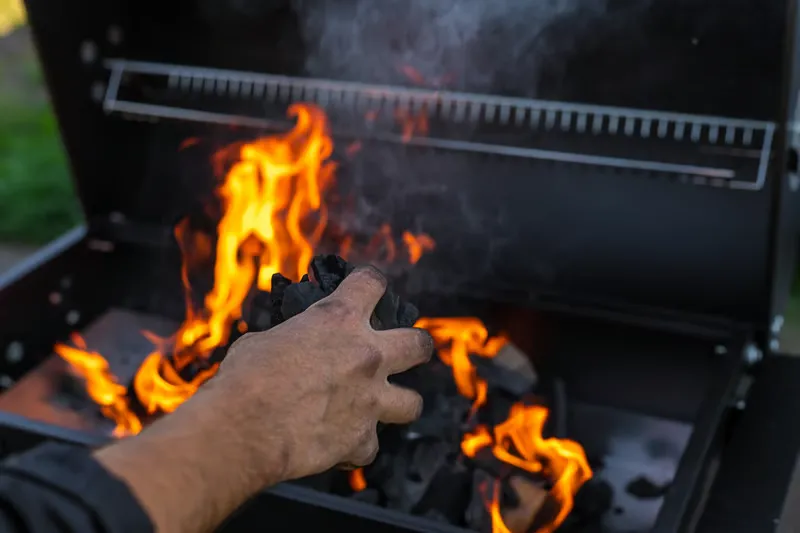
Running your grill on maximum heat the entire time is a common mistake. Very high temperatures cause food surfaces to char fast, fat to burn instead of render, and oil to hit its smoke point. All of this creates more smoke.
Different foods need different heat. Steaks and burgers may handle a hot sear, but chicken, vegetables, and fish do better at medium heat.
How to fix it: Use two-zone grilling. Keep one side of the grill on high and the other on low or off. Sear on the hot side, then finish cooking on the cooler side. Use a thermometer so you are not guessing the temperature, and lower the heat if you see smoke building up.
7. Too Much Oil on the Grates or Food
Oiling the grates helps prevent sticking, but using too much creates smoke. Every cooking oil has a smoke point, which is the temperature where it starts to burn and smoke. Olive oil, for example, has a lower smoke point than avocado oil or refined canola oil.
Pouring oil directly onto hot grates, or soaking food in oil before grilling, leads to drips and flare-ups.
How to fix it: Use a high smoke point oil such as avocado, canola, or peanut oil. Apply it in a thin layer using a folded paper towel held with tongs, or lightly coat the food itself instead of the grates. A little goes a long way.
8. A Brand-New Grill Needs Burning Off
If your grill is new, some smoke is expected. Manufacturers use oils, coatings, and protective films during production, and these burn off the first time the grill heats up. The smell may be a little chemical, which is normal.
How to fix it: Before cooking on a new grill, run it on high for about 15 to 30 minutes with the lid closed. Let it cool, wipe the grates clean, and then season them with a thin coat of oil. The smoke should stop after this first burn-off.
Grease Fires: When Smoke Becomes Dangerous
Heavy smoke can be a warning sign of a grease fire. If you notice flames shooting up from the bottom of the grill, or thick black smoke that keeps getting worse, act immediately.
Here is what to do:
- Turn off all burners.
- Close the propane tank valve if you can do so safely.
- Keep the lid closed to starve the fire of oxygen.
- Do not use water. It can cause grease to splatter and spread the fire.
- Keep a fire extinguisher rated for grease fires (Class B) nearby.
- If the fire does not go out quickly, move away and call emergency services.
After the fire is out, let the grill cool completely before inspecting it and cleaning out all the grease.
How to Deep Clean Your Gas Grill Step by Step
If you have ruled out the simple causes and your grill is still smoking, a full deep clean is usually the answer. Set aside about an hour and follow these steps.
Step 1: Disconnect the fuel. Turn off the burners and shut off the propane tank (or natural gas line). Make sure the grill is completely cool.
Step 2: Remove the grates and flavorizer bars. Take out the cooking grates, heat deflectors, or flavorizer bars. Soak the grates in hot, soapy water.
Step 3: Scrape the firebox. Use a plastic scraper or putty knife to push loose debris and hardened grease into the grease tray. Scrape the inside of the lid too. Flakes that fall from the lid can look like peeling paint, but they are actually carbonized grease.
Step 4: Clean the burners. Brush the burner tubes with a soft brush, and clear the ports with a thin wire. Check for webs inside the venturi tubes.
Step 5: Empty and wash the grease tray. Throw away the old liner, scrub the tray, and rinse it.
Step 6: Scrub the grates and bars. Use a brush to remove carbon from the grates and bars. Rinse and dry them fully.
Step 7: Reassemble and burn off. Put everything back, reconnect the gas, and run the grill on high for 15 minutes with the lid closed. This burns off any remaining residue and moisture.
Step 8: Season the grates. Once cool, wipe the grates with a thin layer of high smoke point oil.
How to Prevent Your Gas Grill From Smoking Too Much
Once your grill is clean, a few simple habits will keep it that way.
- Brush the grates after every cookout. It takes one minute and prevents carbon buildup.
- Empty the grease tray regularly. Make it a habit to check it every few uses.
- Do a deep clean at least twice a year. Heavy grillers should do it more often.
- Preheat properly. Give the grill 10 to 15 minutes to heat up so any light residue burns off before you add food.
- Trim fat and pat marinades dry. Less dripping means less smoke.
- Use a grill cover. It keeps out insects, moisture, and debris that can cause blockages and rust.
- Inspect burners each season. Look for webs, rust, or uneven flames before grilling season starts.
When to Repair or Replace Your Grill
Sometimes cleaning is not enough. If your grill still produces heavy smoke after a deep clean, check for these signs of wear:
- Burners that are rusted through or have corroded ports
- Flames that stay yellow or orange even after cleaning
- Flavorizer bars or heat shields with large holes
- A cracked or damaged firebox that lets grease escape
Replacement burners and flavorizer bars are usually affordable and easy to install. If the firebox itself is badly rusted or the grill is more than 10 to 15 years old, replacing the whole unit may be the safer and more cost-effective option. If you ever smell gas, see damage to the hose or regulator, or are unsure about a repair, have a qualified professional inspect it.
Frequently Asked Questions
Why is my gas grill smoking so much when I turn it on without food?
This is almost always caused by old grease and food residue burning off the burners, bars, and firebox. Run the grill on high with the lid closed for 15 minutes, then clean it thoroughly once it cools.
Is it safe to cook when my grill is smoking heavily?
Light white smoke from food is fine. Thick, dark, or constant smoke is not. It can mean a grease buildup that may catch fire, and it will also make your food taste bitter. Turn off the grill and clean it before cooking.
Why is my new gas grill smoking?
New grills have manufacturing oils and coatings that burn off during the first use. Run the grill on high for 15 to 30 minutes before cooking, and the smoke should stop.
Can a dirty grease tray cause smoke?
Yes. A full or overflowing grease tray can smoke and even ignite. Check and empty it regularly.
Does the color of the smoke matter?
Yes. White smoke is usually vaporizing fat or grease. Gray or black smoke suggests burning residue, carbon, or a developing grease fire.
How often should I clean my gas grill?
Brush the grates after every use, check the grease tray every few cookouts, and do a deep clean at least twice a year.
Final Thoughts
So, why is my gas grill smoking so much? In most cases, the answer comes down to grease, food residue, or the way you are cooking. Dirty grates, a full grease tray, sugary sauces, high heat, and blocked burners are all easy to fix once you know what to look for. A regular cleaning routine, along with smart grilling habits, will keep your grill smoke-free and your food tasting the way it should.